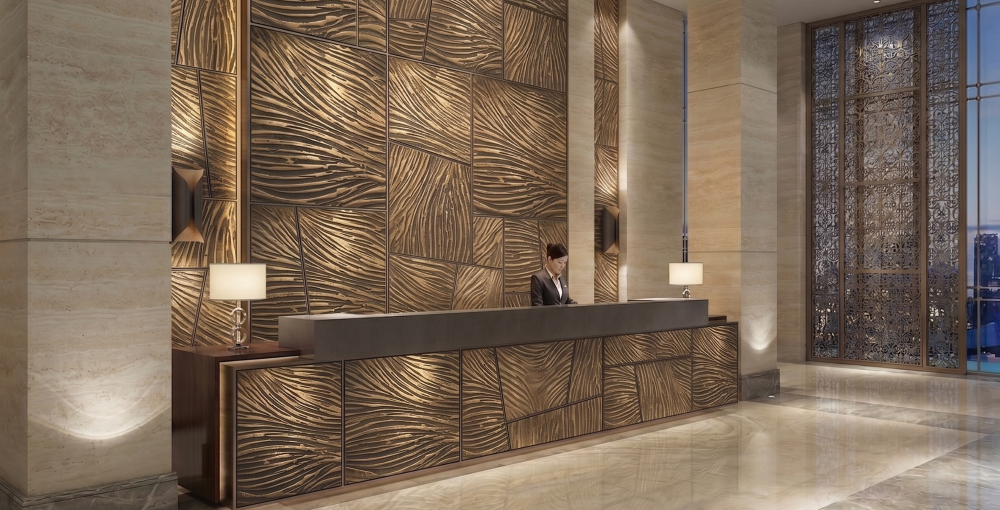
There is a visible difference between a room that has been furnished and a room that has been authored. The former may be expensive, polished, even impeccably styled. The latter carries presence. This is where one of a kind furniture enters the conversation – not as decoration, but as a defining gesture that gives an interior its own point of view.
For clients who collect design with the same discernment they apply to art, fashion, or architecture, rarity is never incidental. It is the point. A singular table, console, seating piece, or sculptural volume changes the logic of a space because it cannot be replaced by another order, another shipment, or another showroom visit. It exists once, and that fact gives it weight.
What one of a kind furniture really offers
The phrase is often used too loosely. In true luxury design, one of a kind furniture is not simply a product with a few custom options or a made-to-order finish. It is a piece conceived as singular from the beginning. Its proportions, material language, surface treatment, and construction are shaped around a specific artistic intention or a specific client vision.
That distinction matters. Limited production can still feel highly exclusive, and there is a place for it. Yet a genuinely unique work carries a different cultural value. It is closer to collectible design than to conventional furniture. Its role is not only to serve a function, but to anchor an atmosphere, hold visual tension, and express authorship.
For private residences, this level of exclusivity often answers a deeply personal brief. A collector may want a dining table that does not resemble anything found in New York, Los Angeles, or London. An architect may need a monumental reception piece that resolves an unusual plan with elegance. A developer may seek a focal object that gives a branded residence or hospitality project its own identity. In each case, uniqueness is not an indulgence. It is a design solution.
Why singular pieces transform interiors differently
Most interiors are assembled through coordination. The palette is balanced, the materials are layered, and the furniture works together harmoniously. That approach can be beautiful, but it does not always create memorability. A singular piece introduces friction in the best sense. It gives the eye somewhere to pause.
One exceptional object can establish rhythm for the entire room. A curved stone chaise can soften rigorous architecture. A sculptural vanity can turn a bath environment into a private retreat. A monolithic console in a rare finish can make an entry sequence feel ceremonial rather than simply functional.
This effect comes from more than rarity alone. It comes from form, scale, and material conviction. One of a kind furniture tends to hold space with unusual confidence because it has not been designed to satisfy a broad market. It has been designed to be itself. That purity often makes the piece stronger.
There is also an emotional dimension that mass luxury rarely reaches. When a client commissions or acquires a singular work, the relationship with the object begins before delivery. Decisions around silhouette, finish, stone, metal, resin, or tactile detailing become part of the story. Ownership starts in the act of creation, not at checkout.
The value of craftsmanship behind one of a kind furniture
Uniqueness without craftsmanship is a fragile promise. In high-end interiors, the value of a singular piece depends on the discipline behind it. Original form must be matched by technical rigor, especially when the work involves complex curves, unusual surfaces, or material combinations that demand experimentation.
This is where atelier production becomes decisive. When design and fabrication remain under one roof, control is tighter, interpretation is more faithful, and refinements happen in real time. That internal continuity protects the piece from dilution. It also allows greater precision when a project calls for difficult dimensions, unusual material pairings, or a very specific visual weight.
For discerning clients, this level of control is not only about quality. It is also about discretion. Bespoke commissions often involve private residences, significant budgets, and highly personal preferences. A controlled process offers confidence that the work will be handled with care from concept through completion, without becoming generic at any stage.
The finest one of a kind furniture often reveals handwork in subtle ways rather than obvious ones. It may be seen in the softness of an edge, the depth of a finish, the transition between materials, or the balance of a curved profile. These are the details that separate an original luxury object from a merely customized one.
One of a kind furniture and the rise of collectible design
Over the last decade, the boundary between furniture and art has become increasingly fluid. Serious collectors no longer treat exceptional furnishings as background pieces. They understand that a table, bench, mirror, or lighting object can carry the same authorship and cultural value as a limited sculpture.
That shift has changed expectations. Design buyers are more educated, more visually literate, and less interested in pieces that feel overexposed. They want work with narrative, material intelligence, and scarcity. One of a kind furniture meets that desire because it resists repetition by nature.
Still, there is a nuance here. Not every interior benefits from turning every object into a statement. Rooms need hierarchy. When too many pieces compete for attention, the effect can feel forced. Singular design works best when it is placed with restraint and confidence. One or two extraordinary interventions often carry more power than a house full of declarations.
For this reason, the most sophisticated commissions begin with context. How will the piece converse with architecture, art, light, and circulation? Should it dominate or quietly command? Should it contrast with the interior envelope or extend it? These questions matter more than trends, because a one of a kind piece should still feel inevitable ten years from now.
How to judge a truly exceptional piece
A rare object should reward scrutiny. Beyond first impact, it should reveal coherence. The concept, proportions, and material choices should feel inseparable, not assembled for effect.
Start with silhouette. Strong one of a kind furniture tends to have a clear profile, even before details are noticed. Then look at material expression. Is the finish superficial, or does it feel integral to the form? Is there tension between softness and monumentality, polish and texture, precision and gesture? The most compelling works hold those contrasts elegantly.
Function matters too. Even highly sculptural furniture should understand the body and the room. A dramatic chair that cannot be used, or a monumental table that overwhelms circulation, becomes a visual stunt. The finest pieces resolve performance and expression together.
Provenance is equally important at the top end of the market. Clients should know who conceived the piece, how it was made, and whether the making process reflects the exclusivity being promised. In a landscape crowded with luxury claims, real value lies in authorship, fabrication integrity, and scarcity that can be substantiated.
An atelier such as Cedrimartini occupies a distinctive position here because the singularity of the object is supported by internal artistic control, handmade execution in Italy, and a language of sculptural forms that cannot be confused with standardized production.
When bespoke is the right choice
There are moments when acquiring an existing unique piece is exactly right, and others when a commission offers more. It depends on the space, the ambition of the project, and the degree of personal authorship the client wants.
Bespoke is especially compelling when the architecture is unusual, the setting is highly visible, or the client wants the object to respond to a very specific emotional atmosphere. A residence overlooking the ocean may call for a form shaped by fluidity and reflection. A penthouse with rigorous geometry may benefit from a single organic intervention. A wellness room may require furniture that feels quieter, more tactile, and almost ceremonial.
Commissioning also allows materials to become part of the design language in a more intimate way. Stone, metal, lacquer, resin, timber, and composite surfaces each carry different moods. The right combination can make a piece feel primal, refined, sensual, or architectural. That level of calibration is difficult to achieve through standard collections alone.
The trade-off, of course, is time. Truly custom work requires development, conversation, and patience. But for clients who value singularity, that slower rhythm is part of the luxury. It means the object has been considered rather than processed.
A remarkable interior does not need more things. It needs pieces with conviction. One of a kind furniture answers that need by bringing authorship, rarity, and material depth into the spaces where life is actually lived.