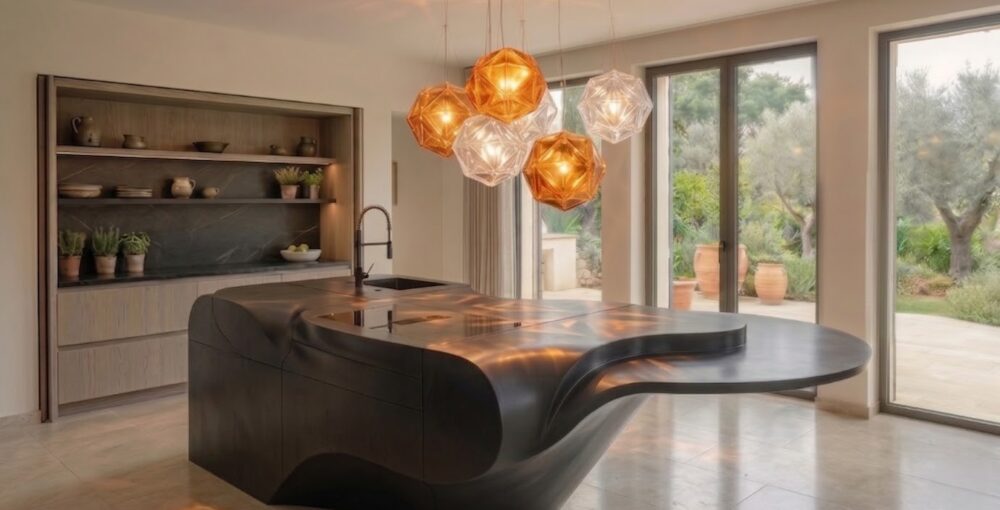
The difference is immediate. A standard table occupies a room. Sculptural furniture design changes the gravity of it.
In a private residence, a gallery-like penthouse, or a hospitality setting built to leave a lasting impression, furniture is rarely judged on function alone. The most compelling pieces hold space the way art does. They shape movement, pull light across a surface, create tension against architecture, and give an interior its point of view. For clients who have no interest in the ordinary, sculptural furniture design offers something far more exacting – utility refined into presence.
What sculptural furniture design means
At its highest level, sculptural furniture design is not furniture with decorative flourishes added on. It is furniture conceived as form first, with function resolved inside the gesture. The line of a console may feel carved by water. A seating piece may read as a continuous volume rather than a frame with upholstery applied to it. A table may appear monolithic from a distance, then reveal extraordinary delicacy in its edges and transitions up close.
This distinction matters. Many pieces borrow the language of sculpture superficially, using exaggerated silhouettes or dramatic proportions without true formal discipline. Authentic sculptural work is more rigorous. Every curve, cut, taper, and junction must justify itself visually and physically. The object has to perform, but it must also feel inevitable, as though no other shape would have made sense.
For collectors and designers, this is where the value resides. A sculptural piece is not simply an accent. It becomes a visual anchor, often carrying the emotional weight of the room.
Why sculptural furniture design matters in luxury interiors
Luxury interiors are increasingly less interested in obvious excess and more interested in distinction. That shift has elevated pieces that feel singular rather than merely expensive. Sculptural furniture design answers that desire because it resists repetition. Even when produced in a limited series, the best work carries the character of an authored object.
There is also a practical reason for its appeal. In highly resolved interiors, especially those with restrained palettes or expansive architecture, one exceptional form can do more than multiple decorative elements ever could. A hand-finished chaise with a fluid profile may provide enough visual drama to quiet an entire room. A console in a rare composite or patinated metal can establish mood without cluttering the architecture around it.
That said, sculptural furniture is not automatically right for every setting. In some interiors, especially where architecture is already highly expressive, restraint is essential. The strongest projects understand balance. A sculptural piece should converse with the room, not compete with it.
Form, material, and the discipline behind the gesture
The public often notices silhouette first. Experts know the real test is how form and material support one another.
A broad organic curve in wood asks very different questions than the same gesture in cast metal, stone composite, or lacquered resin. Material determines not only the finish, but also the weight, structural logic, and emotional effect of the piece. A form that feels warm and intimate in hand-finished timber may become severe in bronze. A polished mineral surface can lend monumentality to a compact object. Leather can soften geometry. High-gloss lacquer can sharpen it.
This is where atelier-led production becomes decisive. Sculptural work demands more than design intent. It requires internal command over prototyping, modeling, fabrication, finishing, and correction. The smallest adjustment in radius or edge thickness can determine whether a piece feels masterful or unresolved. When design and making remain closely connected, the object benefits from continuous refinement rather than compromise.
Material experimentation also plays a profound role. The most memorable pieces often emerge from uncommon pairings – dense stone with unexpectedly soft contours, mirror-polished metal with apparent fluidity, textured finishes applied to pure minimal volumes. These tensions give sculptural furniture its charge. Without them, the piece risks becoming merely decorative.
The emotional effect of sculptural pieces
People often speak about statement furniture in visual terms, but its impact is emotional before it is intellectual. A sculptural object can calm a room or electrify it. It can make an interior feel ceremonial, intimate, enigmatic, or serene.
Curved forms tend to alter atmosphere in subtle ways. They soften circulation, draw the eye without harsh interruption, and create a sense of fluidity that rectilinear plans often lack. This is one reason they are so frequently chosen for wellness spaces, dressing areas, reception zones, and private rooms intended to feel sheltered rather than exposed.
Yet drama does not always come from softness. A sharply resolved, almost architectural piece can create its own kind of authority. The point is not whether a form is organic or severe. The point is whether it carries conviction.
For private clients, that conviction often translates into a deeper kind of ownership. A sculptural piece does not feel replaceable. It becomes tied to the identity of the home and, often, to the client’s own sense of taste.
How to choose sculptural furniture design well
Selecting sculptural furniture requires a more discerning eye than simply choosing luxury furniture. Beauty alone is not enough. Proportion is everything.
The first question is scale. A piece may be exquisite in isolation and entirely wrong for the room. Sculptural forms need air around them. They rely on shadow, approach, and perspective. When crowded, they lose force. When given the right setting, they gain presence with every vantage point.
The second question is material honesty. Does the finish amplify the form, or distract from it? Highly expressive shapes often benefit from restraint in color and surface. At other times, a rare finish is exactly what turns a strong piece into an unforgettable one. It depends on the architecture, the light, and the surrounding palette.
The third question is authorship. Is the piece genuinely resolved, or simply unusual? Serious collectors and experienced designers know the difference quickly. The joinery, weight distribution, detailing, and finish quality reveal whether the object was shaped by a true design and fabrication culture or by trend.
This is why bespoke commissioning remains so powerful in this category. A made-to-measure sculptural piece can respond not only to dimensions, but to mood, circulation, sightlines, and the client’s private way of living. That level of alignment is difficult to achieve with off-the-shelf pieces, however expensive they may be.
Sculptural furniture design as a collectible language
There is a reason the most exceptional examples sit comfortably between furniture and collectible design. They are useful, certainly, but their significance extends beyond utility.
Collectors increasingly seek pieces that can hold their own in dialogue with art, architecture, and rare materials. Sculptural furniture design answers that ambition because it refuses the old hierarchy in which furniture serves as background. Here, furniture participates fully in the cultural identity of the space.
For architects and interior designers, this creates a richer palette. A sculptural table or seating piece can act as punctuation within a larger scheme, or as its central thesis. For developers working in the luxury market, it can be the feature that distinguishes a property from every polished but forgettable alternative. For private clients, it offers something rarer still – a domestic object with the soul of a commission.
This is where houses such as Cedrimartini occupy a distinctive position. When an atelier controls both conception and fabrication, sculptural intent can remain intact from drawing to final finish. That continuity protects the integrity of the object and, just as importantly, the privacy expected by a discerning clientele.
The future of sculptural living
The appetite for sculptural furniture is unlikely to recede, but it is changing shape. The most sophisticated clients are moving away from spectacle for its own sake. They want fewer pieces, better made, with stronger identities and a clearer relationship to their architecture.
That shift favors craftsmanship over novelty. It favors material intelligence over excessive ornament. It favors objects with permanence, discipline, and an unmistakable hand behind them.
Sculptural furniture design endures because it satisfies more than one desire at once. It offers function, but it also offers authorship. It serves the room, but it changes the experience of being in it. And when chosen with care, it does not merely complete an interior. It gives the space a memory before anyone has even sat down.