A room can be impeccably furnished and still feel temporary. The distinction is often not price alone, but intention: investment grade furniture is conceived to outlast a trend cycle, a renovation, and the ordinary compromises of production. It brings together artistic authorship, rare material presence, disciplined construction, and the kind of provenance that gives an object meaning long after its delivery.
For private collectors, architects, and owners of exceptional residences, the question is not simply whether a table, chair, or cabinet will endure. It is whether it will continue to command attention, acquire character, and remain worthy of the setting as the life around it changes.
Investment Grade Furniture Is More Than Expensive Furniture
The phrase is sometimes used too freely. A high retail price may reflect a famous name, a costly showroom, or limited supply, but none of these qualities automatically make a piece investment grade. Equally, a beautifully made object is not necessarily a financial investment in the narrow sense. The resale market is selective, tastes evolve, and liquidity is never guaranteed.
Its real value lies first in permanence. Investment grade furniture is made with enough integrity to be kept, restored, and passed on. It resists the visual fatigue that follows novelty. It has a clarity of form and a material intelligence that allow it to become more compelling over time.
This is why collectible design should be understood as a long-term cultural acquisition rather than an asset class promised to appreciate. The strongest pieces enrich daily life while carrying the presence of an artifact. Their value is both emotional and architectural: they shape how a space is experienced, remembered, and inhabited.
The Qualities That Define Investment Grade Furniture
Authorship and a distinct point of view
A piece with lasting relevance begins with a recognizable design language. It does not need to be loud, but it must possess conviction. The curve of a chaise, the proportion of a monolithic table, or the tension between a polished metal edge and a mineral surface should feel resolved rather than merely decorative.
Authorship matters because it gives an object context. Work made by a design atelier with a clear philosophy carries a lineage of decisions: why a form is asymmetrical, why a finish was developed, why an object was produced in a limited number rather than indefinitely repeated. That coherence separates collectible furniture from luxury merchandise designed to satisfy a seasonal demand.
Materials with depth, not surface effect
The finest materials are not chosen only for their cost. They are selected for how they behave in light, under the hand, and across years of use. Hand-patinated metals deepen. Natural stone reveals veining and variation. Fine woods acquire warmth. Experimental composites can create an almost geological character when developed with restraint and technical understanding.
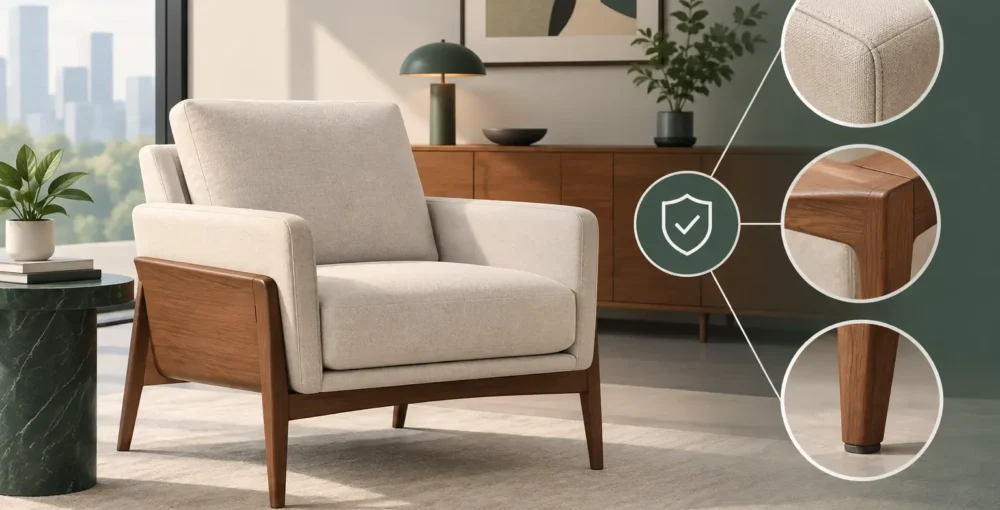
Material honesty is essential. A thin decorative veneer, a simulated stone finish, or a generic lacquer may appear persuasive at first glance, yet it rarely provides the same enduring experience as material worked in its true substance. Investment grade pieces invite close inspection. Their beauty remains present at the edge, beneath the surface, and in the details most people never see.
There are practical trade-offs. A porous stone may require considered care; a highly polished finish will record the life of a household; certain metals will oxidize in a coastal environment. These are not faults when anticipated. They are part of choosing materials whose aging process is understood and welcomed.
Construction that can be maintained
Furniture intended to remain for decades must be serviceable. This does not mean every component should be standardized or visually obvious. It means the maker has considered structure, joinery, weight, movement, and repair before the piece leaves the atelier.
A cabinet should open with confidence after years of use. A dining table should accommodate the reality of gatherings, not merely look impeccable in a photograph. Upholstery should be specified with the possibility of renewal in mind. A sculptural object must be engineered to travel, install, and live securely within its architectural setting.
Handmade production offers an advantage here. When the designer and fabricator remain close to the work, adjustments can be made at the scale of the individual commission. Proportions can respond to a room. Finishes can be tested under the actual light of the project. Details can be resolved without losing the original artistic intention.
Rarity with integrity
Scarcity alone is not enough. Artificial limitation can turn a common object into a numbered one, but it cannot create cultural weight. Meaningful rarity comes from labor, technical difficulty, material availability, and a genuine refusal to repeat a design beyond its natural life.
One-of-a-kind works hold particular appeal because they allow a residence to possess an unmistakable signature. Limited editions offer a different balance: a collectible identity paired with the confidence that the work belongs to a controlled body of production. In either case, documentation matters. A certificate of authenticity, edition information, fabrication details, and records of care protect the history of the piece.
How to Evaluate a Piece Before Acquiring It
Begin with the object itself, not its label. Stand near it. Look at the meeting of two materials, the underside of a tabletop, the transitions around drawers and doors, and the relationship between its mass and the room. A serious piece remains persuasive when viewed at close range.
Then ask who made it and how. Is there a direct relationship between the creative vision and the fabrication? Is the maker able to explain the material process, the structural decisions, and the intended aging of the finish? Can the piece be maintained or restored by the same hands, or by specialists who understand its construction?
Scale is equally decisive. An exceptional console can lose its authority when forced into a narrow passage, while a generously proportioned seating piece may transform a room with high ceilings and strong natural light. Bespoke work is especially valuable where architecture demands precision. It permits the object to answer the room rather than compete with it.
For commissions, ask for material samples and review them in the project environment. Daylight, evening illumination, neighboring finishes, and surrounding art can alter perception dramatically. A finish that feels quiet in an atelier may appear more reflective in a glass-walled penthouse or deeper against limewashed plaster.
The Difference Between Trend and Legacy
Trend-led furniture tends to depend on immediate recognition. It borrows a silhouette, a color, or a finish that has captured the market’s attention, then amplifies it until familiarity becomes exhaustion. There is nothing inherently wrong with fashion in interiors, but it should not carry the burden of permanence.
Legacy pieces work differently. They may be daring, even challenging, but their formal logic remains intact after the first surprise fades. They do not need to match every object in the room. Often, their power comes from contrast: a carved organic form within a precise architectural shell, a dark mineral volume against soft textiles, a singular bronze object in an otherwise quiet interior.
This is where an atelier approach becomes particularly valuable. At Cedrimartini, furniture and sculptural objects are conceived through material experimentation and handmade Italian production, allowing each commission to retain its individuality from first study to final finish. Such control is not simply a matter of quality. It protects discretion, preserves authorship, and makes room for forms that cannot emerge from conventional production lines.
Caring for a Collectible Interior
Investment grade furniture deserves use, not museum-like distance. A dining table should host dinners; seating should offer comfort; a sculptural bath element should be experienced as part of a private ritual. Care means informed use rather than avoidance.
Keep documentation with the piece, including material notes and care instructions. Use specialists for moving, installation, and conservation when a work is unusually heavy, fragile, or technically complex. Avoid indiscriminate cleaning products, particularly on natural stone, patinated metal, lacquer, leather, and hand-applied surfaces. When in doubt, preserve the original finish rather than attempting to make it look newly manufactured.
The most resonant interiors are not assembled quickly. They are composed over time, with each acquisition given the space to establish its own presence. Choose the piece whose form you will want to encounter every morning, whose materials will reward touch, and whose quiet certainty will still feel right when everything around it has changed.