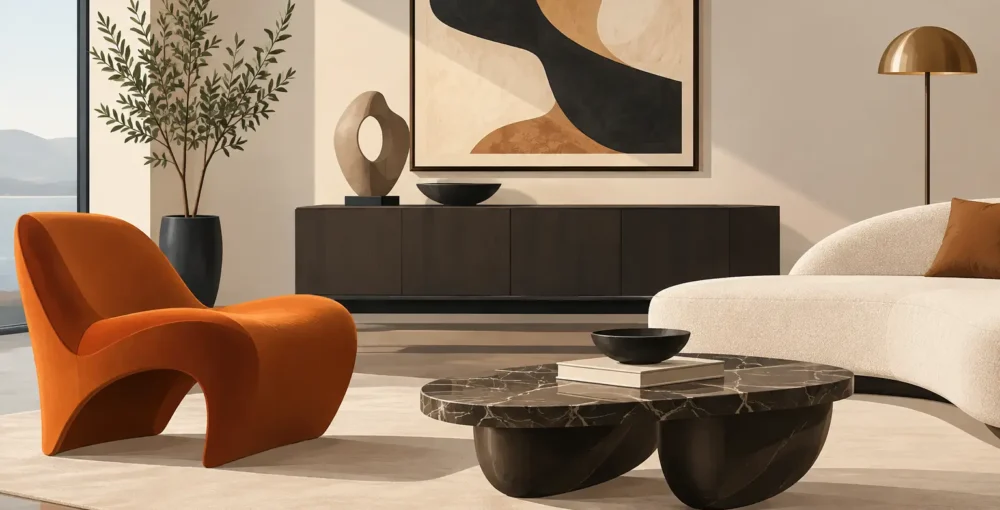
A room can be impeccably furnished and still feel anonymous. The difference often lies in the presence of art furniture: a table whose silhouette changes with the light, a chair that reads as an object before it is occupied, or a cabinet that carries the quiet force of a sculpture. These are not decorative interruptions within an interior. They are the elements that give it authorship.
For collectors and private clients, this distinction matters. Luxury is no longer adequately expressed through recognizability alone. A known name, a precious finish, or an expensive material may signal quality, but they do not necessarily create a personal world. Art furniture does. It introduces singularity, material intelligence, and a point of view that cannot be replicated by a standard collection.
What Defines Art Furniture?
Art furniture occupies the considered territory between functional design and collectible art. It is made to be used, yet its value is not exhausted by utility. A console may hold objects, but its carved volume, surface, and proportions create an experience that remains when the room is empty. A lighting piece may illuminate an evening, while its form establishes the atmosphere of the entire setting.
The category is not defined by excess. Some of the most compelling pieces are restrained in palette and gesture. Their distinction comes from proportion, the tension between curves and planes, or the unexpected dialogue of materials. Stone may appear softened; metal may seem fluid; wood may reveal a grain so vivid that it becomes the composition itself.
True art furniture also has a clear origin. The hand of the maker, the intelligence of the designer, and the character of the material remain legible in the finished object. This is what separates an authored piece from a decorative product styled to resemble one.
Function remains essential
A sculptural chair that cannot be comfortably occupied is sculpture with upholstery. A dining table that prevents conversation, or a bath that ignores the body, has failed to honor the intimacy of domestic life. The strongest pieces resolve this tension rather than choosing one side.
That resolution requires experience. Ergonomics, weight, joinery, maintenance, and placement must be considered from the first sketch. The result should feel effortless, even when its creation has demanded extraordinary precision. In a private residence or hospitality setting, art and use are not competing ambitions. They refine one another.
Why Collectors Choose Art Furniture
Collectible interiors have shifted away from rooms assembled exclusively through catalog selections. Clients increasingly seek environments with a distinct visual language, especially in homes where architecture, art, and landscape have already been carefully considered. A singular piece can establish that language more convincingly than an abundance of luxury accessories.
There is also an emotional dimension. A commissioned dining table becomes part of family rituals. A sculptural vanity transforms a private daily gesture into a moment of composure. A custom seating arrangement can define the social rhythm of a room. These objects acquire meaning through use, then gain further depth as they age within a particular home.
For architects and interior designers, art furniture offers a way to resolve demanding spaces without compromise. An unusual footprint, a dramatic staircase void, a sea-facing terrace, or a suite that requires both privacy and theatricality may call for forms unavailable on the open market. Bespoke work permits the object to respond to the architecture rather than merely occupy it.
Exclusivity is central, though it should never be confused with scarcity for its own sake. A limited edition or one-of-a-kind piece carries value because its making is deliberate. Its proportions are not diluted for mass production. Its materials can be selected with unusual care. Its final presence belongs to a smaller, more intentional circle of interiors.
Material Is Part of the Narrative
In exceptional work, material is never a passive finish applied at the end of a process. It directs the design from the beginning. The density of stone, the warmth of hand-finished timber, the reflective ambiguity of lacquer, and the tactile depth of cast metal each demand a different formal response.
This is why experimentation matters. A surface can be layered, patinated, etched, polished, or worked to retain evidence of the hand. A familiar material can appear entirely unfamiliar when placed in a new context. The most memorable pieces often create this moment of hesitation: the desire to understand how something was made, followed by the instinct to touch it.
Yet material richness needs discipline. Combining rare elements without a governing idea can make an object feel performative rather than powerful. A limited palette often gives form more authority. It may be the quiet collision of bronze and travertine, a single saturated lacquer against pale plaster, or a continuous wood surface that emphasizes a generous curve.
For this reason, samples are not a minor administrative step in a commission. They are part of the creative conversation. Under changing daylight, candlelight, and evening illumination, a surface can reveal different temperatures and depths. A material that appears perfect in isolation may become too reflective beside water, too cold against a particular floor, or too visually active near a significant artwork.
Art Furniture Requires a Different Commission Process
Commissioning a collectible piece is less like ordering furniture and more like developing an architectural detail or acquiring a work of art. The first discussion should move beyond dimensions and finishes. It should address the atmosphere of the residence, the quality of light, the spatial rhythm, the client’s habits, and the objects already present.
A strong atelier will ask precise questions. Is the piece intended to anchor the room or recede into it? Must it withstand daily family life, frequent entertaining, or a more ceremonial use? Is the desired impression quiet, mineral, sensual, monumental, or unexpected? These answers guide decisions that cannot be resolved by a reference image alone.
The process is at its best when design and fabrication remain closely connected. Prototypes, mock-ups, and finish studies allow an idea to evolve without losing its integrity. When the same house oversees concept, material development, and making, each adjustment can be judged against the original intention. Cedrimartini approaches this process as an internal dialogue between artistic vision and Italian craftsmanship, with discretion maintained from the first conversation to final installation.
Privacy is not a secondary luxury in this context. For many clients, the home is an intensely personal expression of identity. A commissioned object may involve private plans, personal preferences, or a collection not intended for public view. A controlled, atelier-led process protects that confidence while allowing for genuine creative freedom.
How to Place Art Furniture Without Overstaging It
A singular object needs space around it, but not necessarily emptiness. Placement is about creating enough visual pause for the form to be understood. A console may benefit from a clear wall and a considered work above it. A low table can be given importance through a restrained seating composition and a rug that frames, rather than competes with, its silhouette.
Scale is the first consideration. Oversized pieces can be magnificent in rooms with architectural volume, but they can overpower a smaller setting if every line is competing for attention. Conversely, a finely detailed object may disappear in a large room unless its placement, lighting, and surrounding textures provide focus.
Light should be treated as part of the composition. Raking light reveals a textured surface. A pool of warm illumination can make a seating object feel intimate after dark. Near a window, a polished or translucent material may take on a different character throughout the day. The aim is not theatrical lighting for its own sake, but a setting in which the object continues to reveal itself.
Restraint is equally valuable when building a collection. Not every piece must be sculptural. A room often gains strength from contrast: one exceptional table set against quieter upholstered forms, or a bold lighting object above a calm, tactile dining surface. The eye needs places to rest if it is to recognize what is rare.
A Living Object, Not a Static Investment
Collectible design is often discussed through provenance, edition number, and future value. Those considerations have their place, particularly when acquiring work from established makers. But the deeper reward of art furniture is lived experience. It changes the way a room is entered, used, and remembered.
A carefully made object should not be treated as untouchable. It should be cared for with respect, according to the needs of its materials, while remaining present in everyday life. The small marks of use on certain finishes, the changing patina of metal, and the softening character of natural wood can become part of its history rather than a loss of perfection.
When choosing a piece, begin with the question that lasts beyond a trend: what object would make this space feel impossible to mistake for anyone else’s? The most enduring answer will be one that serves the room, rewards attention, and becomes more personal with every year of living beside it.